Fading the Public: How Favorite Bias Quietly Hands Underdogs a Mathematical Edge
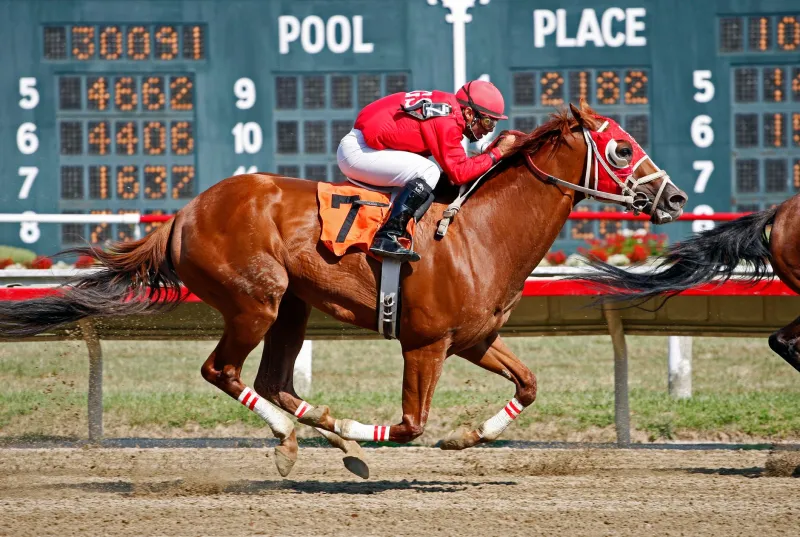
There is a deeply ingrained assumption among recreational bettors that backing the better team is the prudent play. It feels logical. It feels safe. When a franchise like the Kansas City Chiefs or the Los Angeles Dodgers takes the field, the idea of wagering against them seems almost counterintuitive — even reckless. But professional bettors do not trade in feelings. They trade in numbers, and the numbers have been telling a very different story for decades.
The moneyline favorite is not the safe play. In many contexts, it is the most overpriced bet on the board.
The Mechanics of Favorite Bias
To understand why favorites are so frequently mispriced, you need to understand how sportsbooks actually set and adjust their lines. The opening number is constructed around a bookmaker's estimate of true probability. But the line does not stay there. As money flows in from the betting public, books adjust to balance their liability — and the public, almost universally, bets on favorites.
This phenomenon is well-documented. Studies examining NFL, NBA, and MLB betting markets consistently show that a disproportionate share of moneyline tickets lands on the favored side. In the NFL, favorites attract somewhere between 60 and 75 percent of public moneyline handle on most games. In college football, that figure climbs even higher when marquee programs are involved.
The consequence is mechanical. When the public piles onto the Chiefs at -180, the sportsbook pushes that number to -190, -200, or beyond — not because the Chiefs' actual probability of winning has changed, but because the book needs to rebalance its exposure. The underdog's number drifts in the opposite direction, growing longer and, crucially, more valuable.
Sharp players recognize this drift for exactly what it is: a recurring inefficiency baked into the market by predictable human behavior.
Where Favorite Bias Creates the Biggest Gaps
Not all sports are equally susceptible to this effect, and not all game contexts produce the same degree of distortion. Understanding where the bias concentrates is essential to building a practical framework.
MLB Moneylines represent perhaps the most fertile ground. Baseball's structure — 162 regular season games, significant pitching variance, and frequent matchups between teams with similar overall talent — means that even heavy favorites lose at a surprisingly high rate. Historical data from the past decade shows that MLB favorites priced between -150 and -200 cover their implied win probability at a rate that barely justifies the juice, and frequently falls short of it when the full sample is examined. Meanwhile, underdogs in that same pricing band have posted positive returns in several extended periods, particularly in the American League.
NFL and College Football produce a different dynamic. The public's attachment to high-profile teams — the Cowboys, Alabama, Ohio State — creates persistent pricing distortions around those specific franchises regardless of their actual form. Underdogs facing these teams in games where the public narrative is particularly one-sided have historically offered some of the most reliable contrarian value in the sport.
NBA Regular Season presents a more nuanced case. The sheer volume of games, combined with load management and the prevalence of blowouts, means that moneyline favorites in the -250 to -350 range are frequently poor value propositions. The implied probability at those prices demands a win rate that regular season NBA simply does not deliver with the consistency public bettors assume.
The Implied Probability Trap
One of the most useful exercises a serious bettor can perform is converting moneyline odds to implied probability and then honestly assessing whether that probability reflects reality.
A team priced at -200 carries an implied win probability of approximately 66.7 percent before the vig is factored in. Once you account for the sportsbook's margin, the true break-even probability you need from that team is closer to 68 or 69 percent. That is a meaningful threshold. Ask yourself: in the specific context of this game — road travel, injury reports, pitching matchup, rest differential — does this team genuinely win 69 percent of the time? Very often, the honest answer is no.
Underdogs at +150, by contrast, only need to win roughly 40 percent of the time to generate a positive return. When the true probability of an underdog winning sits at 44 or 45 percent — which the public's bias has obscured — the mathematical edge is real and meaningful.
Distinguishing Genuine Value from False Contrarianism
Fading the public is not a strategy in itself. It is a lens through which to evaluate opportunities. Blindly backing every underdog because the public is on the other side is a fast path to losses of a different variety.
The framework that separates disciplined contrarian betting from undisciplined gambling involves several filters:
Line movement confirmation. When a favorite is drawing heavy public action but the line is moving toward the underdog — or holding steady rather than climbing — it signals that sharp money is on the other side. This convergence of public-versus-sharp disagreement is among the most reliable indicators of genuine underdog value.
Situational context. Look-ahead spots, divisional familiarity, travel disadvantages, and scheduling clusters all create conditions where a nominal underdog's true win probability is higher than the public appreciates. These situational edges compound the pricing inefficiency already created by favorite bias.
Closing line benchmarking. If you are consistently identifying underdogs whose closing lines are shorter than the number you bet, it confirms you are capturing value rather than simply getting lucky. Positive closing line value on underdog plays is the clearest evidence that your process is sound.
Sample discipline. No single game confirms or refutes a strategy. The edge in fading public favorites materializes over hundreds of decisions, not dozens. Maintaining process consistency across a large sample is what converts a theoretical edge into actual profit.
The Professional Perspective
Sharps do not inherently love underdogs. They love mispriced assets, and the mechanics of the betting market ensure that underdogs are frequently mispriced in ways that favorites are not. The favorite is the most scrutinized, most discussed, and most bet side of any given ticket. That scrutiny should, in theory, lead to accurate pricing — but human psychology consistently overrides that process.
Casual bettors assign disproportionate weight to brand recognition, recent narrative, and the psychological comfort of backing a winner. Professional bettors assign weight to probability, pricing, and edge. When those two groups disagree, the market distortion they create is the opportunity.
The moneyline favorite will continue to feel like the safe play to the vast majority of bettors. That perception is not going to change. And as long as it persists, the systematic overvaluation of favorites — and the corresponding undervaluation of underdogs — will remain one of the most durable and exploitable patterns in the entire sports betting landscape.
Betting smarter does not always mean betting on the team you think will win. Sometimes it means betting on the price that gives you the best of it — and more often than casual bettors realize, that price is on the other side of the public's conviction.